Cybercab Deliveries Set For Year-End
Tesla executives confirmed that the two-seater robotaxi will reach private customers before 2026 concludes, though most units will remain in company-owned fleets.
By Rafael Ortega ·
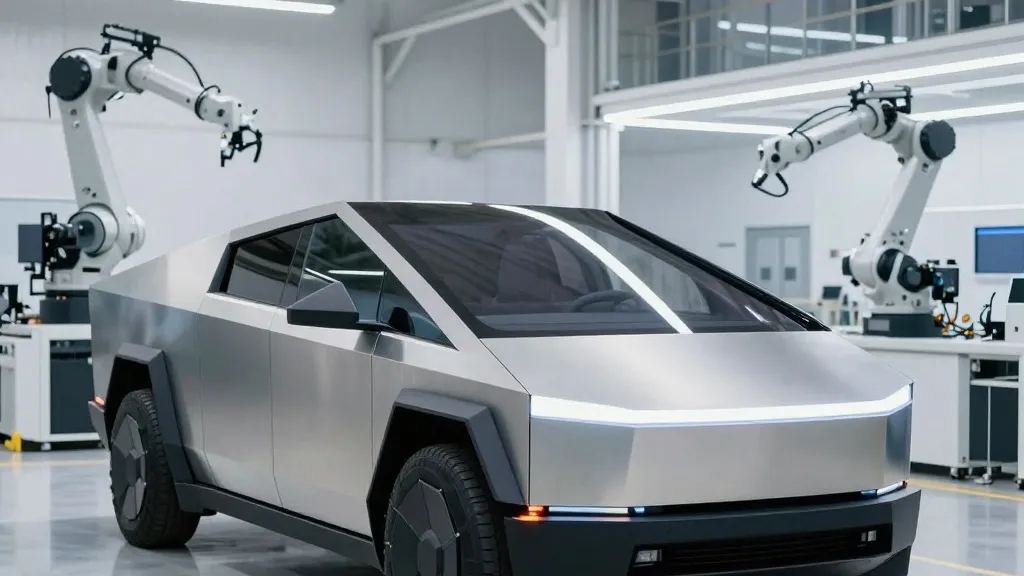
2026 marks the final year for the wait, as Tesla has officially committed to delivering its Cybercab units to individual customers before the calendar year ends. This announcement, made during the company's third-quarter earnings call on October 21, puts a stop to months of speculation regarding the timeline for the fully autonomous vehicle. The specific target date provided by leadership is the end of the current year, signaling a rapid acceleration in the rollout of the two-seater model.
Lars Moravy, the Vice President of Engineering, led the discussion on production status during the call. He stated that the manufacturing line at Gigafactory Texas is currently active and producing the vehicle. However, he clarified that the initial wave of produced units is not heading to private garages. Instead, every vehicle coming off the line is currently being allocated to Tesla’s internal Robotaxi fleet. This strategy allows the company to refine its operations before opening the doors to private ownership.
The transition to private sales is expected to be gradual. Moravy explained that as the operation scales, Tesla will begin delivering these fully designed autonomous vehicles to the public. The Cybercab will be the first such vehicle to undergo this shift. Initial delivery numbers will be small, a deliberate choice to allow the company to gain experience in key areas. These areas include delivery logistics, determining the best ownership models, managing a mixed fleet, and operating autonomous vehicles outside of Tesla’s direct, centralized control.
CEO Elon Musk reinforced the idea that the Cybercab is not intended to be a typical personal car. He described the vehicle primarily as a "transport-as-a-service" offering. Musk noted that the vast majority of Cybercab units will remain Tesla-owned, distinguishing them from traditional consumer models like the Model 3, Model Y, or the upcoming Roadster. This approach positions the Cybercab as a utility for shared mobility rather than a status symbol of private ownership.
The vehicle itself represents a significant departure from traditional automotive design. It is a two-seater configuration that features no steering wheel and no pedals. The entire driving experience relies on Tesla’s Full Self-Driving suite. Production of the Cybercab has been underway since February of this year. In early September, the company began putting these early production units into active service, launching public rides through its Robotaxi program. Tesla has previously indicated that the target price point for the vehicle is approximately $30,000.
While the Cybercab rollout is advancing, the broader autonomous driving strategy continues to evolve. Ashok Elluswamy, Tesla’s Head of AI, indicated that unsupervised Full Self-Driving capabilities are expected to ship to consumer cars during the second quarter of 2027. This timeline suggests that while the Cybercab will be available sooner, the technology will also be integrated into the company’s existing passenger vehicle lineup in the near future.
There are still hurdles to clear before the first private Cybercab keys are handed over. Early buyers or fleet operators may find that the autonomous operation of their vehicles is geographically restricted. These limitations are largely due to the pace of regulatory agencies, which may lag behind the company’s technological readiness. The company is proceeding with caution, ensuring that the vehicles can operate safely within the boundaries set by local laws.
The shift from a purely fleet-based operation to a mixed model of company-owned and customer-owned vehicles marks a new phase for Tesla. The company is balancing the need to scale its Robotaxi service with the opportunity to enter the private market. By starting with a limited number of private deliveries, Tesla aims to mitigate risks associated with operating autonomous vehicles in diverse, uncontrolled environments. The end of 2026 is now the definitive deadline for this initial customer rollout.
Source: Teslarati