Tesla Revises Optimus Timeline to Late 2027 Amid Persistent Hardware Challenges
Elon Musk acknowledges that hand durability and AI generalization remain significant hurdles, pushing external robot deliveries back by roughly a year.
By Rahul Mehta ·
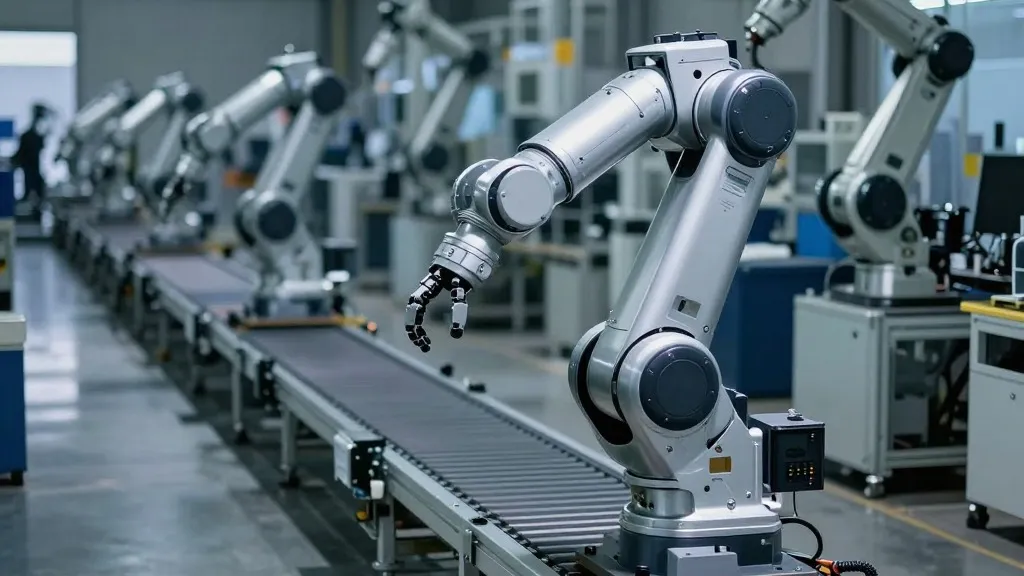
Tesla has officially adjusted its schedule for the Optimus humanoid robot, with CEO Elon Musk stating that deliveries to external customers will now commence around the end of 2027. Speaking during the company’s Q3 2026 earnings call, Musk indicated that substantial work remains to be done regarding the robot’s hands, overall durability, and artificial intelligence capabilities before it can be released into the broader market.
The delay reflects a pattern of shifting timelines for the project. In 2024, the company predicted internal use in 2025 and high-volume external production in 2026. By early 2025, expectations had been set for roughly 10,000 units, yet Musk later conceded that none had performed useful work as anticipated. This latest update moves the external delivery target to late next year, marking another recalibration of the project’s roadmap.
Production of the Optimus has begun on Tesla’s high-volume line in Fremont, a facility previously dedicated to the Model S and Model X. While the majority of the line is installed with an eventual capacity goal of one million units annually, Musk noted that reaching a rate of 20,000 units per week will take at least a year, potentially longer, due to ongoing design modifications. The company’s shareholder letter now describes the current output as the first batch of production-quality robots, implying that earlier units did not meet this standard.
Musk identified the robot’s hands as the primary hardware challenge, explaining that the fingers must be soft enough for delicate tasks yet durable enough to withstand constant wear, a feat difficult for machines that cannot heal like human skin. On the software side, Tesla lacks a large fleet of robots to generate data for its AI, similar to its vehicle fleet for Full Self-Driving. To address this, the company plans to build 10,000 to 20,000 units for an internal “Optimus Academy” to practice tasks, with the AI5 chip integration scheduled for April 2027.
Despite Musk’s assertion that no competitor is close to Tesla’s progress, rivals are advancing their own programs. XPeng recently activated an automated production line in Guangzhou, aiming for mass production by late 2026 and deliveries in early 2027. Meanwhile, Boston Dynamics began producing its electric Atlas in January, with all 2026 deployments already committed, including to Google DeepMind. Hyundai, which owns Boston Dynamics, plans to deploy 25,000 robots across its plants, with a new training center opened in Georgia in September.
The next few months will be critical for Tesla, as the company has promised a video within one to two months showcasing the robot performing unscripted tasks. While competitors like XPeng and Boston Dynamics face similar hurdles with generalization and reliability, their production lines and customer commitments suggest a competitive landscape that is more advanced than previously acknowledged. The success of the late-2027 target will depend on whether Tesla can resolve the hand durability and AI architecture issues that have characterized the project since its inception.
For now, the focus remains on internal refinement as Tesla works through the electromechanical design and reliability concerns. The company’s strategy involves leveraging its manufacturing scale to overcome the data collection bottleneck, but the industry at large continues to grapple with the fundamental difficulty of creating robots that can generalize to new, unstructured environments without extensive pre-programming.
Source: Electrek